
Why Helmet Fitting Matters More Than People Think
For over 40 years, I’ve been active in extreme sports. Today, I work as a Work Health & Safety officer as well as a professional skateboard coach, and over the past six years I have specialised in helmet fitting, working with thousands of kids and adults across a wide range of head shapes and sizes.
That combination gives me a very clear perspective on something that is often misunderstood. Wearing a helmet is important, but wearing it properly is what determines how effective it will actually be when it matters.
Through my coaching work with Frankie’s Wheels Skateboarding School, checking helmets has become second nature. Students arrive ready to go, helmet on, and from a distance everything appears fine. However, a closer look usually tells a different story. Helmets are often sitting too far back, straps are loose or incorrectly positioned, and in many cases the size is not quite right.
To most people, it looks acceptable. From experience, it is not.
A helmet is only effective if it remains in the correct position at the moment of impact. If it shifts, tilts or moves, its ability to protect is significantly reduced. This is where proper fitting becomes critical.
Over the past six years, I have fitted thousands of helmets. One of the key things this has reinforced is that there is no one-size-fits-all approach. Every individual has a different head shape, and achieving the correct fit often requires small but important adjustments. In some cases, it also means selecting a different size or style altogether.
The fitting process itself is not complicated, but it is precise. It involves ensuring the helmet sits correctly on the forehead, that the straps align properly under the ears, that the chin strap is secure, and that the helmet remains stable when the head moves. These are simple checks, but they have a significant impact on how well a helmet performs.
For me, the importance of proper helmet fitting is not only professional, it is also personal. My wife was involved in a crash and was able to walk away from it because she was wearing a helmet that had been fitted properly. Experiences like that reinforce how important these details are in real situations.
As a Work Health & Safety officer, I deal with risk management every day. In most environments, risks can be controlled through systems and procedures. In sport, particularly when children are learning new skills, there is always an element of risk that cannot be removed. Falling is part of the process, and the focus becomes managing the outcome when those moments occur.
Proper helmet fitting plays a key role in reducing the severity of injury when a fall happens.
When working with students, simply telling them to wear a helmet is rarely enough to change behaviour. What makes a difference is showing them how a helmet should fit, explaining what to look for, and helping them understand why it matters. When students understand this, they are far more likely to take ownership of their safety and apply what they have learned.
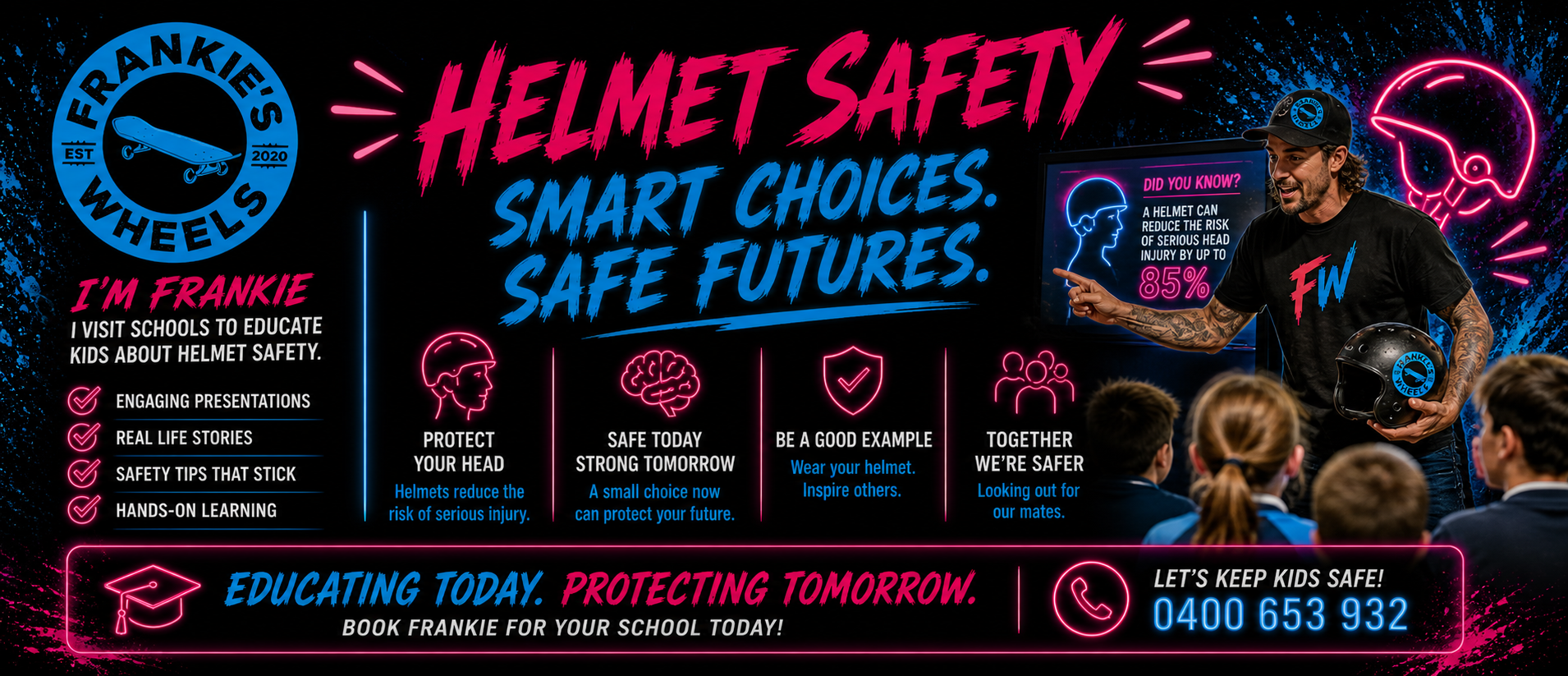
As part of the sessions I deliver in schools and sporting environments, students are introduced to aspects of helmet use and fitting that most have never been shown before. There are simple but important details that can completely change how effective a helmet is, and in many cases, they are things both students and parents are unaware of. These are best demonstrated in person, where students can see and feel the difference for themselves.
The presentations are short, practical and hands-on. Students learn how a helmet should sit, how to adjust it properly, and how to check their own fit quickly and confidently. In addition, I demonstrate how to fall safely, which is a critical but often overlooked part of injury prevention in wheeled sports. Understanding how to control a fall, protect the head and avoid instinctive reactions that can lead to injury gives students another layer of confidence and awareness.
By combining proper helmet fitting with practical techniques such as safe falling, students walk away with skills they can apply immediately. The aim is not just to provide information, but to give them tools they will actually use. That understanding leads to better habits, and better habits lead to safer outcomes when it matters most.